FREE ESTIMATE
Request Your Pest Control Estimate
Box elder bugs are a very common pest around the Washington DC area. As adults, these structure invading pests are typically 1/2 an inch in length and black in color with red rimmed wings. As juveniles, they are much smaller, rounder and exhibit a more distinctive red color than the adult.
Their main source of food is the reason they get their name – the box elder tree . They are also found on ash trees, maple trees, cherry trees and a variety of other seed-bearing plants. They feed by sucking sap from the leaves, shoots and seeds of the host plant. Box elder bugs seldom cause significant damage. They become a nuisance pest when they overwinter in large numbers in homes, buildings and other structures.
If you grow box elder, maple, or ash trees on your property you are a likely target for a box elder bug infestation. Even property adjacent to your's or in your neighborhood could draw these pests to your home. The box elder bug is much less likely to become an interior pest problem during the spring and summer months.
That's because they are out-and-about searching for food. But as the air temperature cools, they begin to look for shelter for the winter. Any place that can provide a southerly or westerly exposure is ideal for box elder bugs. As they look for shelter to weather the storms of winter, they'll search for cracks and crevices. Also small spaces behind siding and other sheltered spots are ideal for these insects.
Request Your Pest Control Estimate
Generally, no. They have been known to bite (using the small mouth parts they use for extracting juices when they feed). The bite should cause no more than minor irritation. It is when the bugs mass together to hibernate that they begin to cause problems in homes and buildings. Even during the coldest winter months, they can emerge inside if the sun is out and the temperature rises, even by a few degrees.
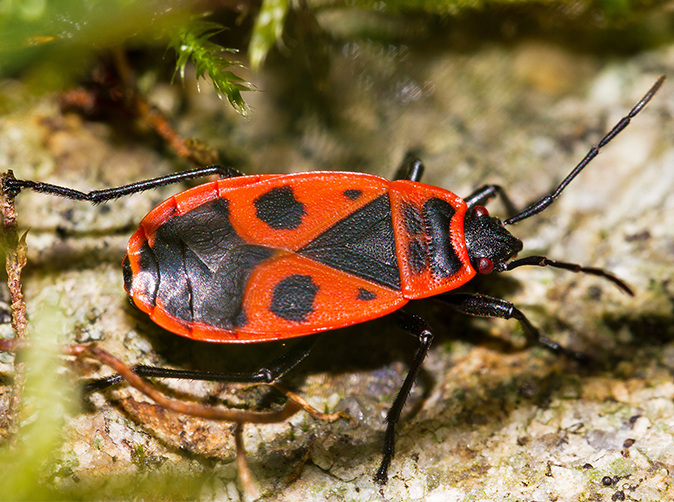
Box elder bugs have few natural enemies. Because their secretions makes them a less-than-appealing meal for predators, natural selection will not control their population.
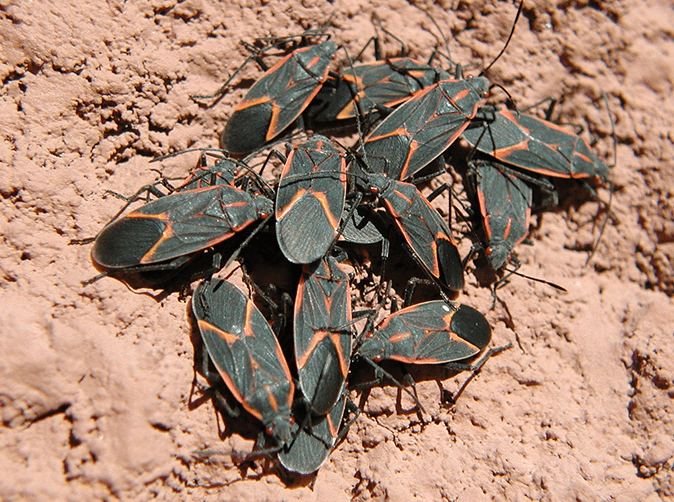
As their name suggests, they feed mostly on box elder trees. They can sometimes be found on other trees such as maple, or ash trees. Their presence may result in discolored fruit and leaves.
American Pest is your best option to get rid of your box elder bug problem. Due to the many types of locations box elder bugs choose to hibernate (eg. behind siding, window frames, wall voids, etc.) it can be very difficult to locate and remove them, something our trained pest control professionals do. If you have a problem with box elder bugs in Washington D.C., Maryland or Northern VA, your best option is to contact American Pest right away.
Use caution if you are planning a do-it-yourself approach to removing box elder bugs. Especially if you are using pesticides as they can be harmful or deadly to humans and pets if used wrong. American Pest's home inspectors and technicians have been trained to apply pesticides and can best decide when and if they should be used.
We pride ourselves on our service to you, the customer, and will do our best to be with you the same or very next day.
Every product in the American Pest arsenal has been registered by the EPA and approved for pest control use. Our well-trained pest control professionals then follow a strict set of guidelines in its application to ensure that no harm comes to humans or pets.
Preventing box elder bugs can be difficult. You can try to minimize the risk of a large number of hibernating bugs invading your property. We suggest making sure all gaps, cracks and crevices around your property are filled. Any spaces around eaves, siding, doors and windows should also be sealed.
“ I called American Pest because of an ant problem but they wound up treating so much more. Great conversation with the main office and the tech who came to the house was incredibly punctual, courteous, extremely knowledgeable/excited about his work. Happy to say I no longer share the house with ants or any other insects!

Find out what our customers are saying. Click links to read or leave a review.
V. Maier - Silver Spring, MD
“ American Pest service technicians are always willing to take their time and listen to concerns, answer questions and crawl around checking out areas that may show signs of intruding insects or rodents.”
J. Evans - Beltsville, MD
“ Everyone at this company is wonderful to work with - whether it’s customer service, billing, technicians and even the web team! I love this company!”
D. Pryor - Silver Spring, MD
“ The service technician was punctual, courteous, and very thorough. He took the time to explain each step in the process to treat our home. And, the services have resulted in a reduction/near elimination of pests in and around our home.”
We align with the best, to bring you the best.




If you have questions about our services, plans, or pricing, we are here for you. Call or fill out the form to communicate by email.
