For Faster Service Call Directly
FREE ESTIMATE
Request Your Pest Control Estimate
Human habitation is associated with 30 of the 4000 species of cockroaches in the world but only four species are what we would call pests in the United States. They are the:
American cockroach (Periplaneta Americana)
German cockroach (Blattella Germanica)
Oriental cockroach (Blatta Orientalis)
Asian cockroach (Blatella Asahinai)
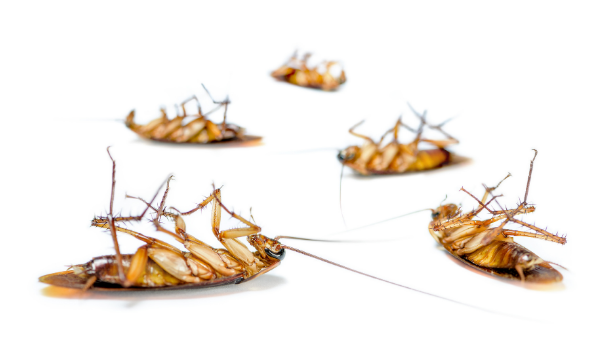
American Pest often deals with the American cockroach, German cockroach, and Oriental cockroach. These three species differ in the following ways:
Request Your Pest Control Estimate
Color: Reddish-Brown
Distinguishing Marks: Light-colored edges to the body; wings appear longer than the body
Length: Quite large at 1 to 1 ½ inches
Habitat: Prefers warm, moist areas. When located inside homes, they are often found in basements, sewers, and other areas that hold moisture.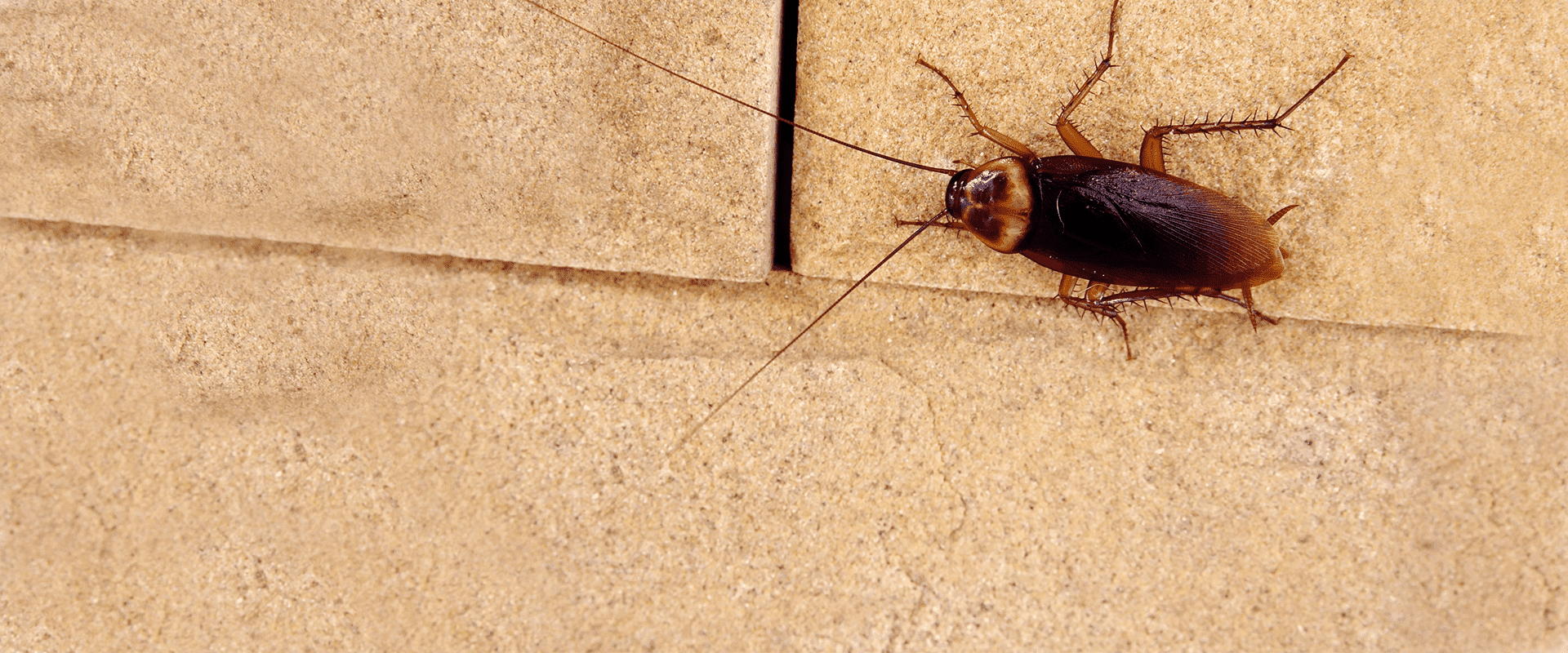
Color: Light Brown/Tan
Distinguishing Marks: Dark lengthwise stripes on the head
Length: Rather small at 1/4 to 5/8 inch
Habitat: Prefers to live in small cracks and crevices inside kitchens, bathrooms, and other areas where moisture is present. When infestations are very bad, they can be found throughout the entire home.
The German cockroach is thought to be one of the most invasive species of cockroach known to man. They are the most common species of cockroach found in homes, apartments, and food service establishments. They are one of the most challenging pests known to the pest control industry. Found in virtually every type of structure or building where people live or work, they have become quite adept at adapting to ever-changing environments. They are skillful hitchhikers, extremely prolific breeders, and may tolerate many pest control treatments.
The female German cockroach can carry as many as 40 eggs at a time, producing up to three or four generations in a single year. Singlehandedly, the German cockroach can produce infestations of towering proportions in as little as 3 months.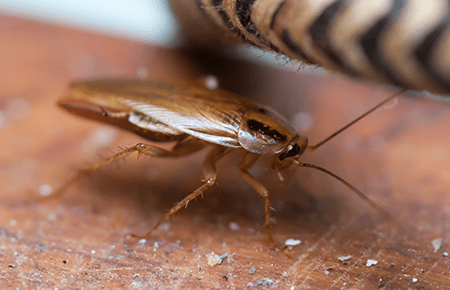
Color: Dark/Oily Black
Distinguishing Marks: At first glance, it appears to be wingless
Length: Rather large at 1 inch
Habitat: Prefers dark, moist areas. When they become a problem in homes, they are often found near sewer drains, pipes, and wet basements. Under porches or inside crawl spaces are other places where you might find this type of roach.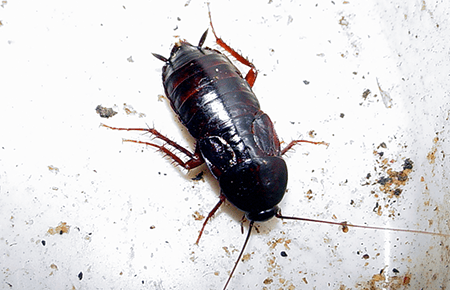
Both the German cockroach and American cockroach seek similar environments in which to breed. A suitable site will consist very simply of food, water, humidity, warmth and a secure breeding place. The American cockroach prefers to breed in and around underground sewer facilities. They also seek out utility networks from which they may venture out into other buildings. This is why we often find American cockroach activity in older row homes. Areas of high humidity are preferred, such as in basements, boiler rooms, steam tunnels and sewers. German cockroaches are much more likely found moving from place to place in bags, boxes and even on clothing. With both species, it only takes one pregnant female to create an infestation. Cockroach numbers can increase almost exponentially if conditions are favorable.
Many illnesses and health problems are associated with German and American cockroaches. They carry viral and bacterial pathogens on their bodies and in their feces which can cause, among others: -Salmonella Poisoning -Asthma Attack -Diarrhea -Dysentery
Most people understand just how difficult cockroaches can be to get rid of ; in fact, their toughness is the stuff of urban legend. This naturally nocturnal pest has a keen ability to quickly adapt to almost any surrounding. American Pest’s highly trained pest control professionals excel at knowing just where cockroaches hide. They will also determine which cockroach treatment solutions will be the most effective. Using our S.T.A.R system of pest control, we will customize a solution to rid you of these tough, disease carrying pests. Contact American Pest today for more information about the cockroach treatment options available in D.C., and throughout our area.
Many do-it-yourself methods to try and get rid of cockroaches do not work. Getting rid of roaches takes a trained professional. One who knows where to find these pests in your home or business. As mentioned before, it only takes one egg-carrying female to create an infestation.
At American Pest, we pride ourselves on our speed and delivery of service. We make every effort to be with you the same or very next day.
American Pest employs an arsenal of pest control products. Every product we use has been registered by the EPA for pest control use. This means you can rest assured that no harm will come to humans or pets while your pest control treatment is taking place.
Preventing cockroaches is not an easy task. We just cannot say when and where you might come in contact with these smart hitchhikers. Detecting infestations early and conducting treatments aligned to their breeding patterns is the key to any successful cockroach control plan. You can attempt to limit the likelihood of a growing infestation by: -Reducing or eliminating all sources of water -Cutting off all access to food; keep food items in sealed, air-tight containers -Cleaning up spilled pet foods and remove grease stains around kitchen stoves and appliances -Inspecting items such as boxes, grocery bags and shipping packages before they enter the home -Removing clutter and excess harborage areas such as old newspapers, magazines and boxes
M. Usher - Cheltenham, MD
“ My service technician is excellent! He is professional, knowledgeable, and consistently arrives on time. I know my home is in good hands with American Pest.

Find out what our customers are saying. Click links to read or leave a review.


J. Evans - Beltsville, MD
“ Everyone at this company is wonderful to work with - whether it’s customer service, billing, technicians and even the web team! I love this company!”

H. Pace - Laurel, MD
“ I have been so thrilled with American Pest. The technicians seem far more knowledgeable than other companies we've dealt with.”
We align with the best, to bring you the best.




If you have questions about our services, plans, or pricing, we are here for you. Call or fill out the form to communicate by email.
